Exergy3 - 10M£ Seed round: Why we invested?
The problem: industry's massive, carbon-intensive addiction to heat.
When discussing the energy transition, heat is frequently overlooked, yet it accounts for nearly 50% of global final energy consumption surpassing both electricity and transportation. The industrial sector is particularly dependent, with 74% of its energy use dedicated to heat rather than electricity.
Currently, almost 90% of industrial heat generation relies on fossil fuels, driving roughly 12 gigatons of greenhouse gas emissions every year. However, this dependency is no longer just a climate issue; it is a critical vulnerability. As demonstrated by the ongoing 2026 Strait of Hormuz crisis, geopolitical bottlenecks can trigger unprecedented surges in natural gas prices almost overnight, severely impacting industrial margins. This current shock reinforces the harsh lessons of the 2022 energy crisis: electrifying industrial processes is no longer only about hitting decarbonization targets, but an urgent imperative for energy sovereignty.
Direct electrification, however, faces a major hurdle: the intermittency of renewable energy and volatile electricity prices. Thermal Energy Storage addresses this by allowing industries to engage in energy arbitrage: storing heat when renewable electricity is cheap and abundant, and discharging it steadily to meet the continuous demands of the factory.
Check our latest Deepdive to learn more about Thermal Energy Storage!
Why we invested in Exergy3?
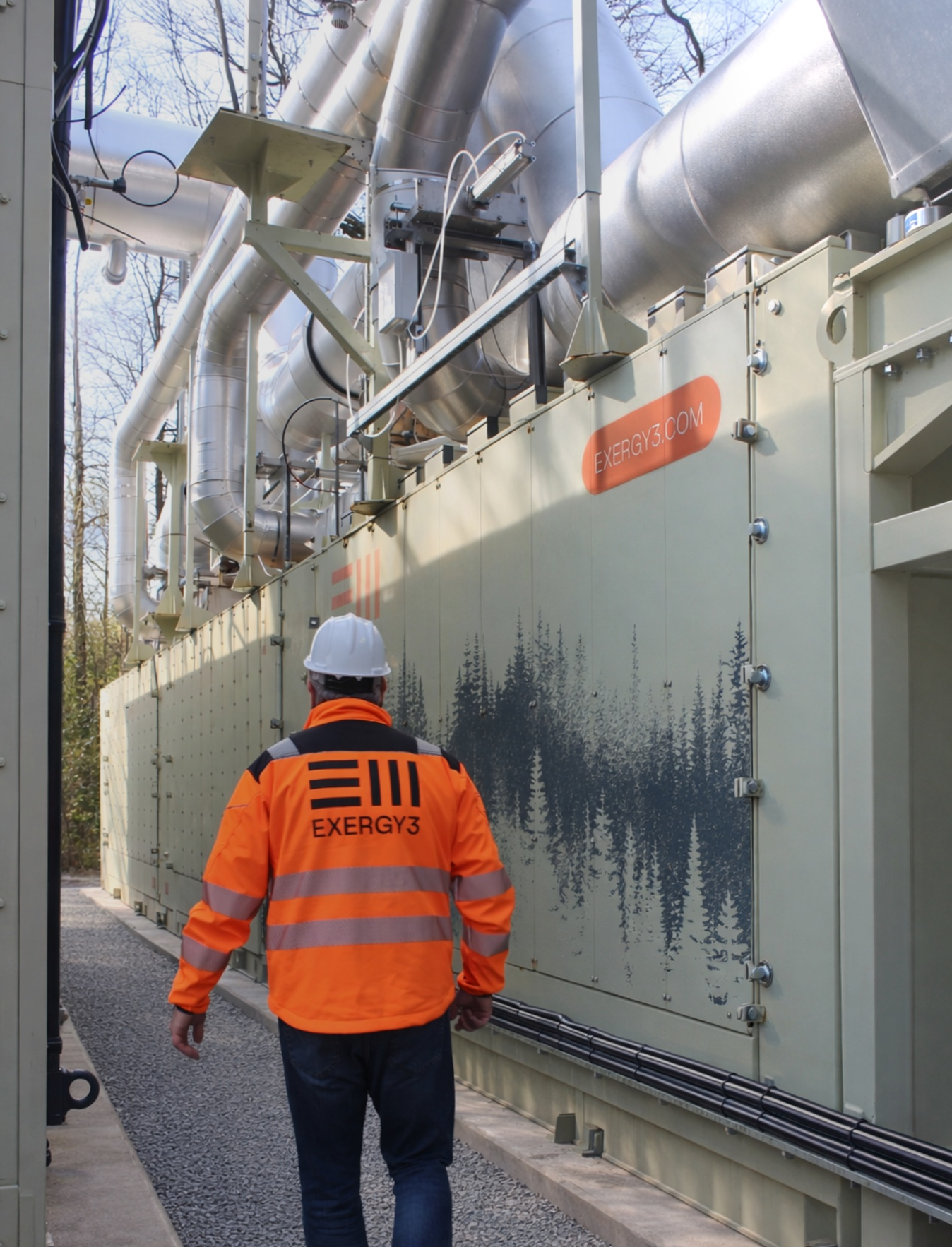
- An exceptional team capable of rapid execution: Exergy3 combines more than 15 years of rigorous academic research at the University of Edinburgh led by Adam Robinson with Markus Rondé exceptional execution capabilities. In just over 2 years, together with the Exergy3 team, they successfully built and deployed a 30MWh industrial demonstrator, proving their ability to rapidly scale from the lab to industrial validation.
- A highly versatile technology designed for frictionless integration: Exergy3 provides a highly versatile Sensible Heat Storage solution capable of reaching up to 1200°C. They offer a modular design and a co-firing with traditional fuel sources option, ensuring that the system can be deployed rapidly and integrated directly into existing industrial value chains, avoiding the need to heavily retrofit established processes.
- Building an European Leader: Designed in Scotland, Exergy3’s technology has the potential to scale globally. Starting with continental Europe expansion, Exergy3 will be opening an office in Bavaria to accelerate their go-to-market. To support them in this journey, we are proud to lead this £10M Seed round alongside a robust international syndicate, including Bayern Kapital, Kibo Invest, Zero Carbon Capital, Scottish Enterprise, and OCC Capital.
The impact
Exergy3 targets medium and high-temperature industrial heat, the segment that is historically the most complex to electrify and where alternatives like heat pumps or green hydrogen remain limited or financially uncompetitive.
The tangible impact of their solution is already being proven on the ground. As recently highlighted by the BBC, Exergy3 has successfully commissioned a world-first decarbonized heat project at Scotland’s historic Annandale Distillery. By capturing otherwise wasted wind power and converting it into 530°C eco-friendly steam for the distillation process, Exergy3 is not only paving the way for the world's first low-carbon whisky.
By bridging the gap between intermittent renewable energy and the continuous high-temperature heat required by the manufacturing sector, Exergy3 unlocks a massive carbon abatement potential.
We are thrilled to back Exergy3 and actively support their strategic and commercial journey to redefine industrial heat for good!